

-
-
SHOP




Unveiling the Top Common IHC Markers in Medical Research
 2026-02-12
By admin

In the era of personalized medicine, the ability to visualize specific proteins within a tissue sample is no longer just a laboratory technique; it is a clinical necessity. Immunohistochemistry (IHC) has become the trusted method for revealing the molecular patterns of tumors. It directs doctors toward treatments that match the individual case and improve outcomes.
Celnovte, a company dedicated to making pathological diagnostic reagents and instruments, leads in this area. It supplies the practical tools that turn complicated biological signals into clear, usable diagnostic information.
The Critical Role of IHC Markers in Disease Classification
IHC markers play a central part in determining where an undifferentiated tumor started and in forecasting how a patient might respond to certain therapies. Antibodies attach to particular proteins in the sample. Pathologists then distinguish between harmless and cancerous cells and pinpoint the precise cancer subtype.
Defining Specificity and Sensitivity in Tissue Analysis
Any IHC marker succeeds or fails based mainly on two measures.
- Specificity: This refers to the antibody binding only to its correct target. It avoids false positives that might cause wrong diagnoses.
- Sensitivity: This measures how well the test picks up even small amounts of protein. That ability matters for catching disease early or tracking tiny amounts left after treatment. Celnovte directs its research toward reaching strong performance in both areas for all its reagents and equipment.
Essential IHC Markers in Oncology and Research
Although many markers exist, a smaller set of frequently used ones supports most routine diagnostic panels.
Breast Cancer Management: The ER, PR, and HER2 Standard
Estrogen Receptor (ER), Progesterone Receptor (PR), and Human Epidermal Growth Factor Receptor 2 (HER2) stand out as key markers in everyday practice.
- ER and PR: These show whether endocrine therapy suits the patient.
- HER2: This marker guides targeted treatment and gains importance in Antibody-Drug Conjugate development.
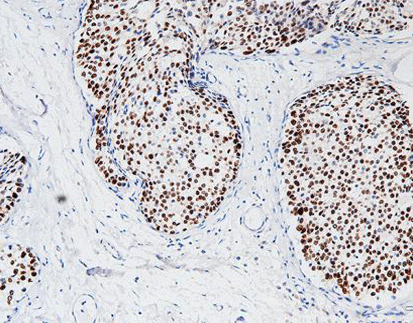
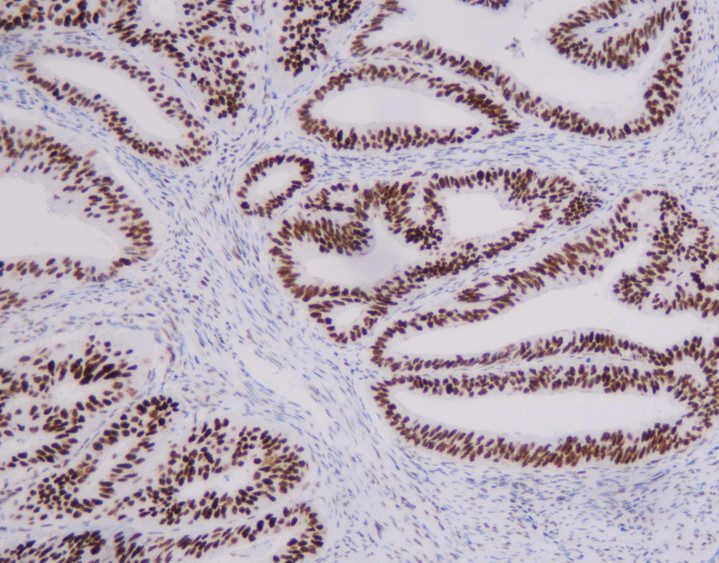
- Clinical Value: Celnovte’s ER, PR, and HER2 antibodiesundergo regular testing. Its HER2, ER, and PR products have earned optimal scores in NordiQC for six years straight. That consistent record means reliable staining strength and dependable results slide after slide.

Lung and Gastrointestinal Insight: TTF1 and CDX2
- TTF1 (Thyroid Transcription Factor-1): This marker helps separate primary lung adenocarcinomas from tumors that spread from elsewhere.
- CDX2: It identifies gastrointestinal sources in metastatic cancers.
- Validation: Celnovte’s own TTF1 antibody received an official “optimal” rating from NordiQC. The result confirms strong performance in challenging diagnostic settings.
The Mismatch Repair (MMR) Panel: MLH1, MSH2, MSH6, and PMS2
The MMR panel screens for Lynch syndrome. It also predicts how well immune checkpoint inhibitors work against various solid tumors.
- Mechanism: These proteins fix mistakes during DNA copying. Absence of any one of the four signals indicates microsatellite instability (MSI).
- Celnovte’s Solution: Celnovte offers a complete MMR detection system. It improves staining quality at each step and supports uniform testing across different laboratories.

Proliferation and HPV Screening: Ki-67 and P16 Dual Staining
- Ki-67: This marker reflects how fast cells divide and indicates tumor aggressiveness.
- P16: It serves as a stand-in sign for high-risk HPV infection.
- Dual Staining Innovation: Celnovte developed a P16/Ki-67 Dual Staining Detection Kit (available in Green/Blue or Yellow/Cyan). The kit shows both markers on one slide. That approach raises accuracy when identifying HPV-linked cancers of the oropharynx and cervix.
Enhancing Diagnostic Accuracy with Celnovte’s Innovation
Celnovte goes beyond supplying reagents. It delivers complete pathology solutions. The company bases its headquarters in Rockville, MD, while major production and research take place in China. It holds several international approvals, including ISO13485, FDA, and CE IVDR.
MicroStacker™ Detection Systems: Superior Sensitivity through Micro-Polymer Design
Older detection methods sometimes face problems from large dextran carriers that block enzymes from reaching targets. Celnovte’s MicroStacker™ technology overcomes those issues with distinct advantages.
- Micro-Polymer Scaffold: It builds on a tight arrangement of F(ab’) fragments from IgG secondary antibodies plus peroxidase enzymes.
- Biotin-Free System: The design skips streptavidin and biotin entirely. That removes background staining from natural biotin found in many tissues.
- Unsurpassed Sensitivity: The small polymer shape penetrates tissue more easily and builds denser signals. It therefore outperforms standard HRP polymers in picking up faint targets.
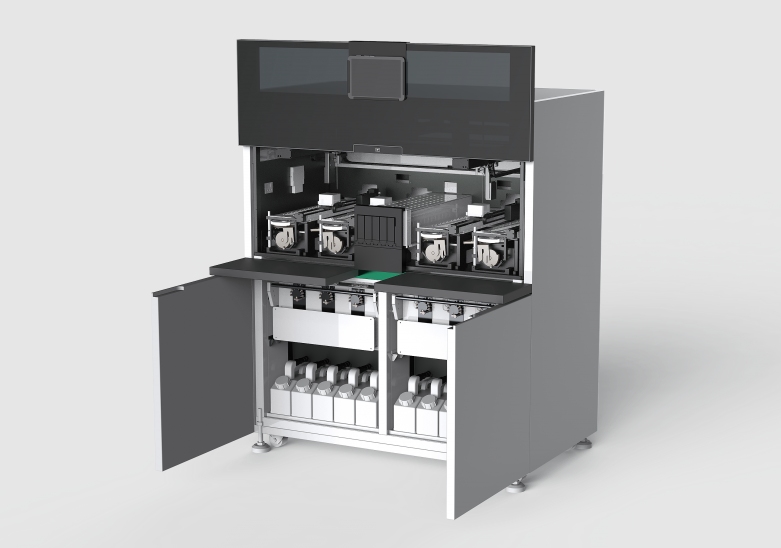
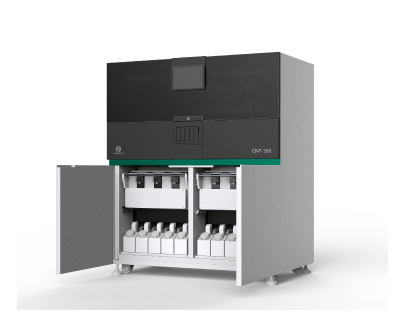
CNT360 Full Automatic IHC & ISH Stainer: Maximizing Laboratory Throughput
Manual staining slows down busy labs and invites inconsistencies. The CNT360 addresses those drawbacks directly.
- All-in-One Platform: It runs several IHC and ISH protocols at once on the same machine.
- Efficiency: The stainer delivers quick completion times. That speed supports fast research cycles and high daily sample volumes.
- Total Solution: When used together with Celnovte’s more than 400 ready-to-use primary antibodies, the CNT360 produces steady, high-quality results with very little operator involvement.
Self-Cloned Primary Antibodies: Validated by Global Quality Standards
The antibody itself determines how trustworthy an IHC result turns out. Celnovte builds and maintains a large collection of antibodies developed internally.
- Extensive Catalog: The lineup includes over 120 self-cloned MMab and RMab primary antibodies, along with more than 400 ready-to-use versions.
- Global Reach: Hospitals and labs in over 2,300 leading Chinese institutions use these products. Exports reach more than 40 countries, showing broad acceptance of the manufacturing standards.
Validating Performance: The Impact of NordiQC Assessments
Third-party reviews build credibility in pathology. Celnovte takes part in NordiQC (Nordic Immunohistochemical Quality Control) on a regular basis to confirm its products match worldwide expectations.
- Proven Results: Forty-one primary antibodies, among them CD10 and TTF1, hold “Optimal” or “Good” ratings.
- Reliability: The breast cancer markers ER, PR, and HER2 have kept “Optimal” status for six years running. That long-term record highlights stable production and accurate performance.
Conclusion: Precision at the Cellular Level
Routine IHC markers such as ER, PR, HER2, and the MMR panel form the foundation of cancer research and patient care. Their real worth appears only when paired with dependable detection tools and steady automation. Celnovte combines proven primary antibodies with the MicroStacker™ Detection System and the CNT360 stainer. Laboratories, therefore, reach high levels of detail and consistency. The company holds fast to its purpose: advancing cancer diagnostics and improving patient outcomes through ongoing scientific work.
FAQ
Q: What makes the MicroStacker™ Detection System different from traditional HRP polymers?
A: It uses a micro-polymer scaffold with F(ab’) fragments, which is more compact than traditional dextran-based systems, offering higher sensitivity and a biotin-free process to eliminate background noise.
Q: Can the CNT360 stainer run IHC and ISH tests at the same time?
A: Yes, the CNT360 is an all-in-one platform capable of executing multiple IHC and ISH protocols simultaneously on the same system for maximum efficiency.
Q: How fast can Celnovte’s technology perform frozen section IHC?
A: Using our specialized PolyStacker™ Technology, frozen section IHC experiments can be completed in as little as 10 minutes with 100% confidence.
Q: How many Celnovte antibodies have been validated by NordiQC?
A: Currently, 41 of our self-cloned primary antibodies have received “Optimal” or “Good” assessments from NordiQC, including key markers like TTF1, CD10, ER, and PR.
![[Yellow/Cyan] P16/Ki-67 Dual Staining Detection Kit](https://www.celnovte.com/wp-content/uploads/2025/12/Immunofluorescence.jpg "[Yellow/Cyan] P16/Ki-67 Dual Staining Detection Kit")
