
-
-
SHOP




Why High-Throughput IHC Staining is the Backbone of Large-Scale Clinical Centers
 2026-03-06
By admin
In the busy setting of a top-tier clinical center, the pathology department often serves as the central hub of activity. As cancer cases continue to increase around the world, these large centers now deal with a much higher number of tissue samples than before. The task goes beyond simply reaching a diagnosis; it requires accuracy, steady results, and quick delivery to meet urgent clinical needs. High-throughput Immunohistochemistry (IHC) staining has moved from an optional tool to an essential part of the process. It acts as the foundation that keeps the diagnostic workflow from turning into a serious delay.

For companies such as Celnovte, supplying these automated systems involves more than equipment. The focus remains on providing dependable performance that supports critical patient care routines.
The Critical Demand for Throughput in Modern Clinical Pathology
Scaling Diagnostics to Meet Rising Sample Volumes
Today’s large clinical centers routinely handle hundreds or even thousands of slides each day. Studies show that automated staining cuts error rates by as much as 80% when compared with manual work. This difference matters a great deal when testing for complicated tumor markers. To manage this level of work, labs need complete systems that run various immunostaining methods—IHC, ISH, and multiplex—on one machine while keeping the same level of quality.
Minimizing Turnaround Time (TAT) for Life-Saving Decisions
In cancer care, timing plays a key role. Any hold-up in IHC results can push back surgery or the start of chemotherapy. High-throughput platforms help by processing many slides at once. For example, finishing a complete staining run in roughly 2.5 hours lets a lab complete several rounds during a single shift. As a result, oncologists obtain the information they require to build treatment strategies within the usual diagnostic timeframe.
Celnovte’s High-Throughput Solutions: Where Efficiency Meets Precision
Celnovte, a company focused on pathological diagnostic reagents and instruments since its start in 2010, stands out as a major player worldwide. It has placed more than 1,000 automated IHC stainers across different regions. The product lineup addresses the heavy workload faced by big clinical centers.
CNT 360: The All-in-One Powerhouse for High-Volume Workflow
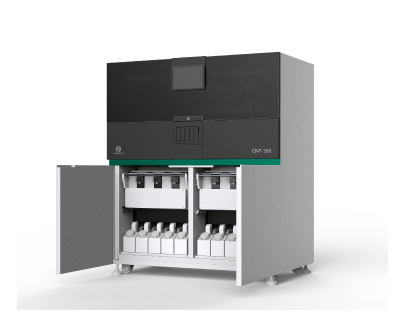
The CNT 360 Full Automatic IHC & ISH Stainer serves as our leading option for busy labs. This machine handles multiple immuno-staining protocols on the same platform.
- Feature: It processes 60 slides and finishes the full staining in about 2.5 hours.
- Advantage: Labs gain smooth handling of both IHC and ISH tasks. In large centers, one technician manages a wide range of tests—from everyday primary antibodies to more involved EBER-ISH molecular checks. This setup delivers quick turnaround times and improves overall lab output.

CNT 320: Engineered for Robust Clinical Scaling
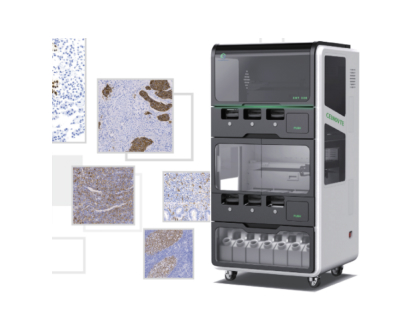
The CNT 320 Full Automatic IHC Stainer targets centers that need a strong, dedicated IHC system.
- Feature: It focuses on steady performance and repeated accuracy for high-volume clinical IHC.
- Advantage: The design handles round-the-clock use in demanding settings. By taking over the most time-consuming steps, it lightens the workload for pathologists and staff while meeting strict NMPA, FDA, and CE-IVDR requirements.
MicroStacker™ Detection System: Enhancing Sensitivity in Mass Testing
High capacity loses value without solid accuracy. Our own MicroStacker™ Detection System forms the core chemistry behind the instruments.
- Feature: It builds a compact layered arrangement using a micro-polymer scaffold. This holds F(ab’) fragments of secondary antibodies along with peroxidase enzymes.
- Advantage: In contrast to standard HRP polymers that rely on large dextran carriers, MicroStacker™ skips streptavidin and biotin entirely. This avoids non-specific staining from natural biotin in tissues. For busy centers, the outcome shows up as sharper slides right away, which cuts down on repeated tests that cost time and money.
Bridging the Gap: Real-World Application Scenarios
Standardizing MMR Testing in Large Oncology Centers
Routine screening for colorectal and endometrial cancers calls for Mismatch Repair (MMR) protein checks (MLH1, MSH2, MSH6, and PMS2).
- The Problem: Hand-done MMR staining frequently produces uneven or spotty signals. This creates uncertainty during diagnosis.
- The Solution: With the CNT 360 and our full MMR panel, a center runs the entire set on one unit. The automated process spreads reagents evenly, leading to consistent, clear staining. Pathologists then identify Lynch syndrome more reliably and support decisions about immunotherapy.

Intraoperative Rapid Diagnosis for Surgical Precision
While surgery is underway, a pathologist sometimes has only a short window to check if margins are free or if a tumor is present.
- The Problem: Standard frozen sections depend only on H&E morphology. In tricky cases, such as distinguishing bronchiolar adenoma from lung adenocarcinoma, the view remains unclear.
- The Solution: Celnovte’s PolyStacker™ Technology shortens frozen section IHC to 10–15 minutes. Surgeons receive quick marker detection and gain full confidence to decide on immediate steps while the patient stays in the operating room.
Conclusion: Empowering Precision Medicine
High-throughput IHC staining has become a necessary element in clinical work rather than a simple feature. Large centers tackle both heavy volume and the need for speed when they combine Celnovte’s automated stainers, such as the CNT 360 and CNT 320, with our advanced MicroStacker™ chemistry. With more than 600 installations globally and consistent top ratings from NordiQC over a decade, we continue our commitment to improving cancer diagnostics.
Are you ready to remove the diagnostic bottleneck in your lab? Contact Celnovte today to arrange a demonstration of our high-throughput IHC solutions and discover the difference in your daily workflow.
Contact Our Today!
FAQ
Q: How does automation specifically reduce the cost-per-test in high-volume clinical labs?
A: Automation lowers costs in several practical ways. It cuts reagent waste with accurate dispensing and reduces the hours spent by staff. It also prevents expensive repeat runs that often follow human mistakes or uneven manual staining.
Q: Why is “Biotin-Free” detection considered the gold standard for clinical IHC?
A: Tissues like liver or kidney contain natural biotin that leads to unwanted background staining. Biotin-free methods, including MicroStacker™, remove this issue completely. The result is greater specificity and cleaner slides for diagnosis.
Q: Can high-throughput stainers handle both IHC and ISH simultaneously?
A: Yes. Systems like the CNT 360 support combined IHC and ISH work—such as EBER or CISH—on the same machine. Labs consolidate their processes and free up bench space.
Q: What is the impact of automated IHC on NordiQC and other quality control assessments?
A: Automation creates a controlled setting that produces steady outcomes. This reliability explains why Celnovte’s antibodies and platforms have earned optimal scores in NordiQC evaluations for six years running.
![[Instrument] MicroStacker™ Plus Polymer Detection Kit](https://www.celnovte.com/wp-content/uploads/2020/08/3.gif "[Instrument] MicroStacker™ Plus Polymer Detection Kit")
