

-
-
SHOP




How Automated Slide Staining Enhances Diagnostic Accuracy
 2025-12-05
By admin
Introduction: The Critical Shift in Pathology Diagnostics
When a biopsy comes in, the pathologist’s job is simple on paper: look at the slide and say what’s wrong. In real life, though, everything rides on how clearly the cells show up under the microscope. For years, labs did all the staining by hand—dipping racks, timing steps with a stopwatch, hoping the water bath stayed at exactly the right temperature. One tired tech on a Friday night could make the brown too faint or the background too dirty, and suddenly a cancer marker disappears. Doctors wait longer, patients worry longer, and sometimes the call gets harder than it should be.
That’s why more labs every year are switching to machines that take the human wiggle out of the process. Automation isn’t just faster—it’s the difference between “pretty good most days” and “exactly the same every single time.”
The Challenge of Manual Staining Variability
Hand staining looks easy until you watch ten different techs do the same protocol. One person rinses for a few seconds longer, another lets the antibody sit an extra minute because the timer beeped while they were on the phone. Temperature drifts a degree or two if the room heater kicks on. Those tiny slips add up, especially in IHC, where the difference between a positive and a negative result can be just a shade of brown. In a busy hospital lab handling hundreds of cases a week, that kind of variation is no longer acceptable.
Defining the Automated Slide Stainer
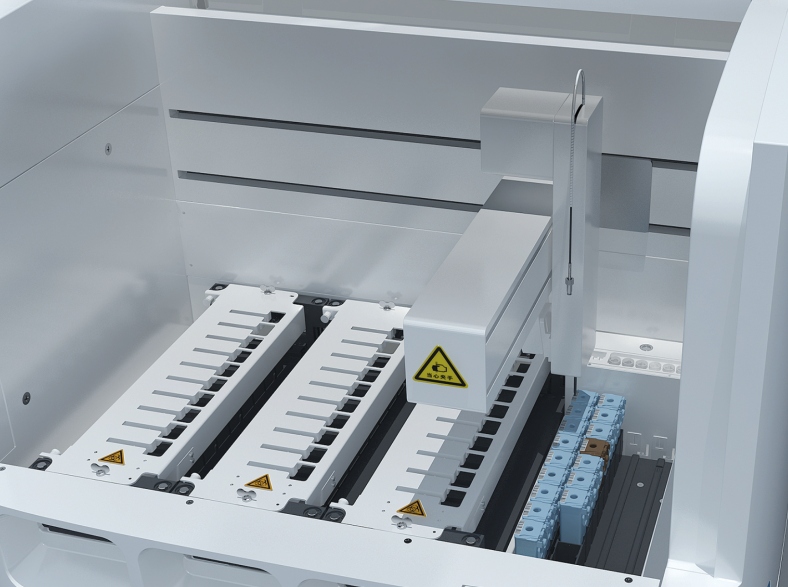
An automated slide stainer is basically a very smart robot that never gets bored or rushes. You load the slides, pick the protocol, and walk away. The machine dispenses exactly 100 µl of antibody, incubates at exactly 37 °C, and washes three times with the same pressure every run. Some models, like the ones Celnovte builds, can run 60 slides at once without breaking a sweat. The result? Every slide in the batch looks like it came from the same perfect day.
The Imperative for Automation in Pathology
Labs today face more cases and tighter deadlines than ever. A good automated stainer pays for itself by cutting repeats, speeding up turnaround, and giving pathologists slides they can actually trust.
Enhancing Consistency and Reproducibility
When the same breast cancer case goes to three different hospitals, the HER2 score should come back the same every time. With manual staining, that’s a hope, not a promise. Automated systems follow the protocol to the letter, slide after slide, day after day. Pathologists tell us the first thing they notice is how much easier sign-out becomes when the staining is rock-solid consistent.
Mitigating Human Error: Reducing Operational Variables
People make mistakes—spilling a drop, forgetting a wash step, mixing up two reagents that look alike. Machines don’t. They scan barcodes, track every reagent lot, and alert if something is wrong. Celnovte pairs their stainers with ready-to-use kits so there’s no pipetting, no mixing, no “did I add the right amount?” moments. Fewer errors mean fewer call-backs from oncology and fewer nervous patients waiting an extra week for a repeat biopsy.
Addressing Throughput Demands and Turnaround Time (TAT)
Big cancer centers can see 300–400 IHC requests a day. Hand staining that volume would need an army of techs working around the clock. Since 2018, Celnovte has shipped over 800 fully automated IHC stainers around the world, and the labs that installed them routinely cut their average TAT from days to hours. When a surgeon is waiting in the OR for a frozen section result, those hours matter.
Celnovte’s Technological Advantage in Precision Staining
Celnovte: A Global Authority in Pathological Diagnostics
Started in 2010, Celnovte now supplies more than 2300 top hospitals in China and labs in over 40 countries. Their factories carry NMPA, GMP, ISO13485, ISO9001, FDA, and CE IVDR certifications—basically every major quality stamp you can get. We make their own antibodies (over 130 clones), and 47 of them scored top marks in NordiQC external assessments. That kind of track record means pathologists know the brown they see on the slide is real.
Driving Accuracy Through Integrated Technology
-
Leveraging Proprietary MicroStacker™ Detection Systems
The reagent and the machine have to speak the same language. Celnovte’s MicroStacker™ kits are famous for picking up weak signals without messy background noise. Their newest MicroStacker™ Ultra is currently the cleanest, most sensitive system on the market. For frozen sections during surgery, we developed PolyStacker™—it finishes a full IHC run in about 10 minutes, so the surgeon isn’t left standing there with an open patient.
![[Instrument-specific] MicroStacker™ Plus Polymer Detection Kit](http://www.celnovte.com/wp-content/uploads/2025/12/Instrument-specific-MicroStacker™-Plus-Polymer-Detection-Kit.jpg)
Celnovte’s Next-Generation Automated Staining Instruments
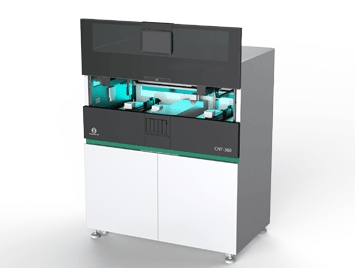
CNT 360 Full-Automatic IHC & ISH Stainer
The CNT 360 is the workhorse that a lot of reference labs swear by. It runs IHC and ISH on the same platform, handles dozens of slides overnight, and still finishes most standard runs in under three hours. Ready-to-use reagents, barcode tracking, and built-in protocols make it almost foolproof.
CNT 480 Fully Automatic Cytology Stainer
Liquid-based Pap tests and cell blocks need a gentle, even coating. The CNT 480 was built for exactly that job. It gives uniform staining on thin, fragile cytology preps, so markers like p16/Ki-67 jump out clear and sharp—critical for cervical cancer screening programs that process thousands of slides a month.
CNT 300/330 Fully Automatic Multiplex IHC Stainer
Cancer care is getting personal. Doctors want to see four, five, or even seven markers on the same piece of tissue. The CNT 300 and CNT 330 run true multiplex cocktails without the colors bleeding into each other. Celnovte’s DualStacker™ kits make it possible to spot things like PD-L1 plus tumor-infiltrating lymphocytes at a glance instead of ordering separate slides.
Conclusion: The Future of Precision Pathology
Automated staining isn’t about replacing techs—it’s about giving pathologists slides they can trust every single time. When the brown is always the right brown and the background stays quiet, the diagnosis gets faster and surer. Celnovte keeps pushing the edge with better reagents, faster protocols, and machines that just don’t make mistakes. Over 800 labs worldwide have already made the switch, and the results speak for themselves: clearer answers, shorter waits, better outcomes.
FAQ
Q: What is the primary benefit of switching from manual to automated slide staining?
A: You get the same perfect staining every run, which means fewer repeat tests and diagnoses pathologists can trust right away.
Q: Does Celnovte offer stainers that can handle high volumes of samples?
A: Absolutely. The CNT 360 and similar models are running in hundreds of busy labs—we’ve installed over 800 automated IHC stainers globally since 2018.
Q: What proprietary technology does Celnovte use to ensure high sensitivity in IHC staining?
A: Our MicroStacker™ Detection Systems, including the brand-new MicroStacker™ Ultra, give the cleanest signal and the least background noise available today.
Q: Besides IHC, what other types of automated stainers does Celnovte manufacture?
A: We make dedicated cytology stainers (CNT 480), H&E stainers (CNT 620), special stainers (CNT 520), and multiplex platforms (CNT 300/330).
RELATED PRODUCTS
