-
-
SHOP




 PRODUCT CATEGORY
 PRODUCT CATEGORY

CONTACT US
 Phone
Phone
 Email
Email
 Address
6 Cuizhu St, Zhong Yuan Qu, Zheng Zhou Shi, He Nan Sheng, China, 450001
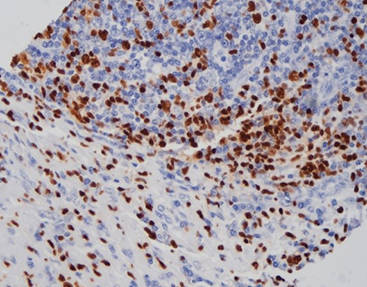
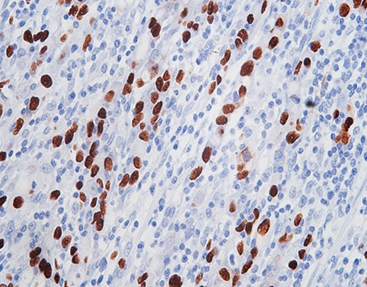
EBER Probe (Automated)
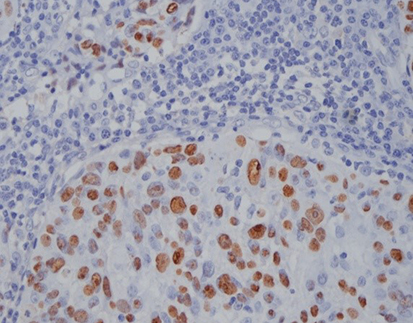
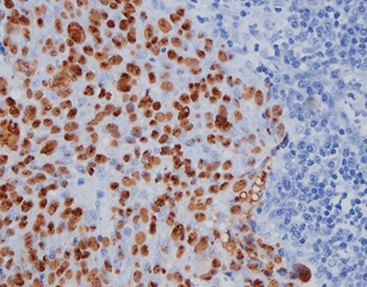
The EBER CISH Probe is designed for the in situ detection of Epstein–Barr virus (EBV)–encoded small RNAs (EBER1 and EBER2) in formalin-fixed, paraffin-embedded (FFPE) tissue sections using chromogenic in situ hybridization (CISH).
EBERs are abundantly expressed in EBV-infected cells and are highly stable, making them the gold-standard targets for identifying latent EBV infection in tissue samples. This probe enables clear, nuclear-localized signals with excellent sensitivity and specificity, allowing accurate identification of EBV-associated cells within their histological context.

 Chat
Chat

 message

 Quote
Quote
Product Features
Key Features
– Targets EBER1/EBER2, the most reliable markers of latent EBV infection
– Compatible with FFPE tissues
– High sensitivity and low background for crisp nuclear staining
– Chromogenic detection for easy interpretation under a standard bright-field microscope
– Suitable for routine diagnostic pathology and research applications
Clinical Applications
– Hodgkin lymphoma
– Nasopharyngeal carcinoma
– EBV-associated gastric carcinoma
– Extranodal NK/T-cell lymphoma, nasal type
– Post-transplant lymphoproliferative disorders (PTLD)
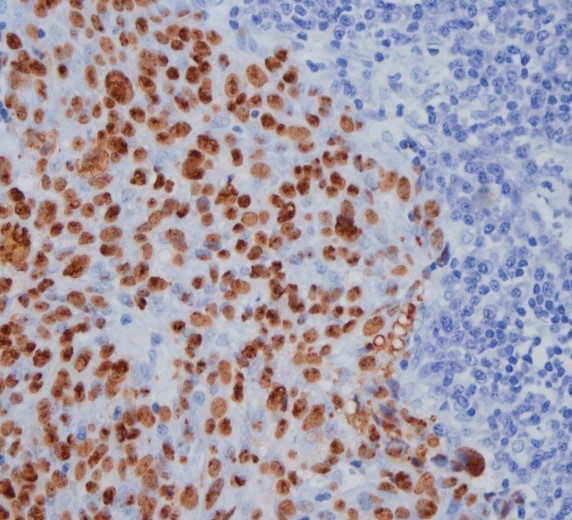 Nasopharyngeal Carcinoma EBER Positive
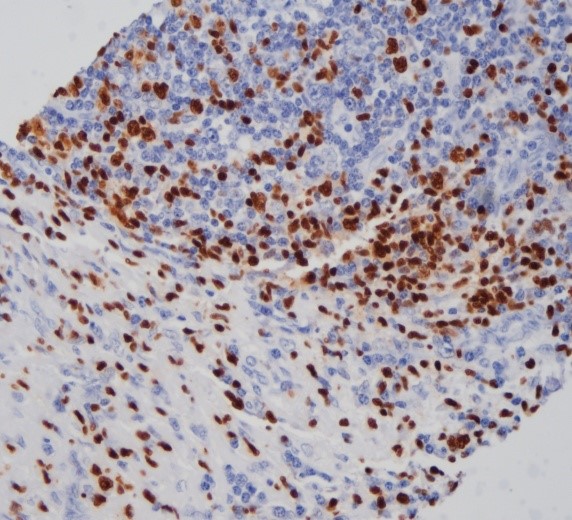 Lymphoma EBER Positive
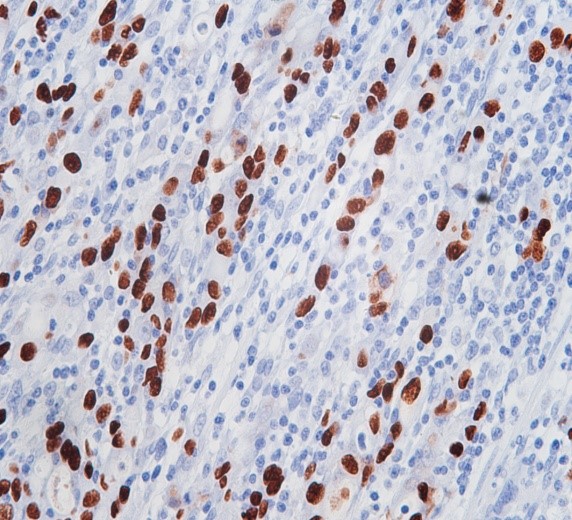 Gastric Carcinoma EBER Positive
Specification
|
EBER Probe |
Code |
Classification |
Specification |
|
CF6002 |
Automated |
25T/50T/100T |
|
Main Components |
|
|
EBER Probe |
DAB Enhancer |
|
Anti-digoxin Antibody |
EBER Positive Control |
|
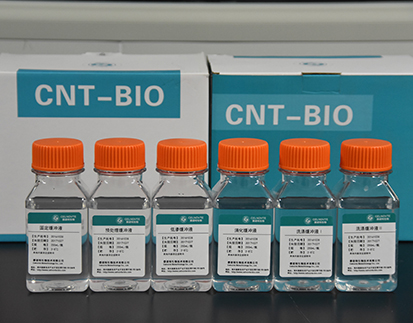
Pepsin Solution |
MicroStackerTM |
More Info
Clinical Significance of EBER Detection:
1) Find the cause: Distinguish whether it is latent infection of EBV or disease state caused by EBV infection.
2) Identify non-neoplastic diseases such as infectious mononucleosis and chronic active EBV infection.
3) Differential diagnosis of neoplastic diseases, such as HIV-associated lymphoma, Burkitt lymphoma, Hodgkin’s lymphoma, nasal NK/T lymphoma, nasopharyngeal carcinoma, and lymphoepithelial carcinoma.
Guide treatment and prognosis:
1)EBV infectious diseases: Antiviral treatment, good prognosis
2)Lymphoproliferative diseases after organ transplantation: Better early prognosis
3)EBV-positive non-Hodgkin’s lymphoma has a worse prognosis than EBV-negative. EBV-positive Hodgkin’s lymphoma has better or no significant difference in prognosis than EBV-negative.
4) Nasal NK/T cell lymphoma has poor prognosis.
Related Product