
-
-
SHOP


 Home
Home
 Solution
CLINICAL SOLUTIONS
Beyond Tissue: Adapting IHC Techniques for Liquid-Based Cytology (LBC)
Solution
CLINICAL SOLUTIONS
Beyond Tissue: Adapting IHC Techniques for Liquid-Based Cytology (LBC)
Beyond Tissue: Adapting IHC Techniques for Liquid-Based Cytology (LBC)
 2026-03-26
By admin
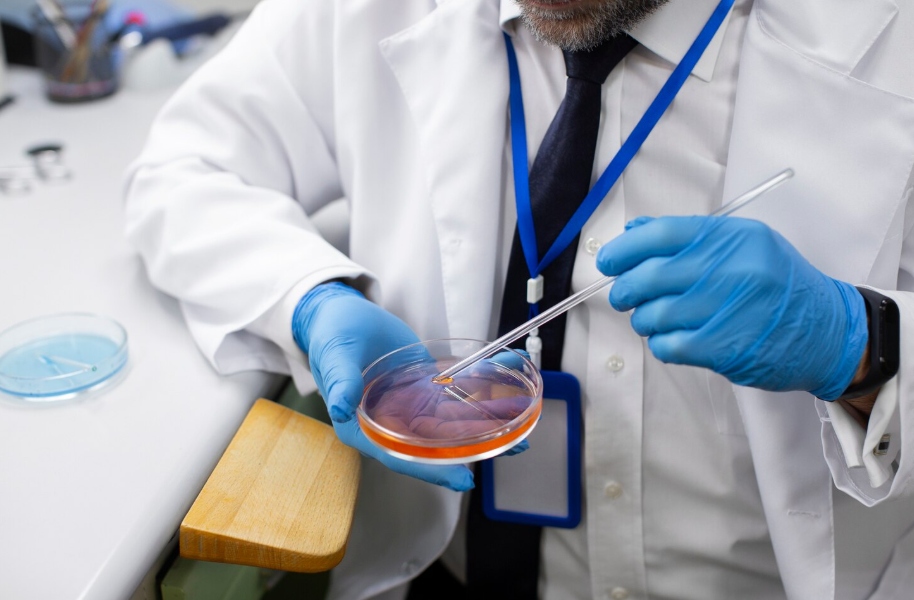
In current diagnostic practices, the move to less invasive methods has turned Liquid-Based Cytology (LBC) from a basic screening aid into a key part of firm diagnoses. But depending only on cell shape often puts doctors in uncertain areas. To fill this space, Immunohistochemistry (IHC)—usually the top choice for solid tissue—is now being adjusted for cytology work. Celnovte, a front-runner in pathology advances, leads this change by supplying the right tools and materials so that even tiny cell samples give strong diagnostic details.
The Diagnostic Shift: Why Integrate IHC with Liquid-Based Cytology?
Shifting from old Pap smears to LBC has boosted sample clarity by clearing out things like blood and mucus. However, with Fine Needle Aspiration (FNA) and Endoscopic Ultrasound (EUS) gaining ground, cytologists face tougher questions about samples.
Limitations of Morphology in Cytology
Looking at cell shape by itself often fails to tell apart normal reactions from cancer, or to pinpoint where a spreading tumor started. Studies show that adding extra tests like IHC raises accuracy in lung and breast FNA cases by more than 20%. By spotting certain protein levels, IHC delivers the “molecular mark” that shape analysis misses.
The Rise of Minimally Invasive Procedures
People now favor milder ways to get diagnosed. As a result, pathologists get smaller amounts of cells. Fitting IHC to these samples lets teams do full checks—including tests for markers like PD-L1—without needing a follow-up surgery that cuts deeper.
Technical Challenges in Adapting IHC for LBC Samples
Moving IHC from formalin-fixed paraffin-embedded (FFPE) tissue to cytology slides takes real effort. The special traits of LBC samples create clear obstacles, and without proper handling, these can weaken the trustworthiness of results.
Cell Adhesion and Sample Loss
Cytology samples miss the firm structure of tissue slices. In the tough heat-based antigen retrieval and repeated washes needed for IHC, cells easily peel off the slide. Old hand-done approaches usually lead to big sample losses, making the test useless.
Optimization of Antigen Retrieval
Regular tissue steps can overheat delicate cytology bits. Since LBC fixers vary from basic formalin, the key protein spots stay protected in different ways. Striking the right mix of cell openness and protein stability calls for tight control over heat and chemical levels.
Celnovte Solutions: Redefining Precision in Cytology Staining
Celnovte tackles these issues with a mix of machine automation and smart chemical setups. Our aim is to build a steady base where small samples still produce full outcomes.
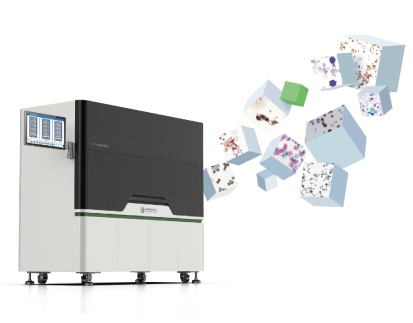
Automation Excellence: The CNT 480 Fully Automatic Liquid-Based Cytology Stainer
The CNT 480 is built to deal with the sensitive side of LBC items. Unlike tissue stainers adapted for other uses, this setup uses a soft “Drip-staining” and “Centrifugal Control” method to cut down physical strain on cells.
-
Key Advantage: Built-in sample handling. It runs the whole process from slide setup to staining, so all cells from the vial make it to the slide.
-
Problem Solved: It removes the ups and downs of hand work, sharply lowering the “cell dropout” rate and giving even staining over various runs.
Signal Amplification: The MicroStacker™ Detection System
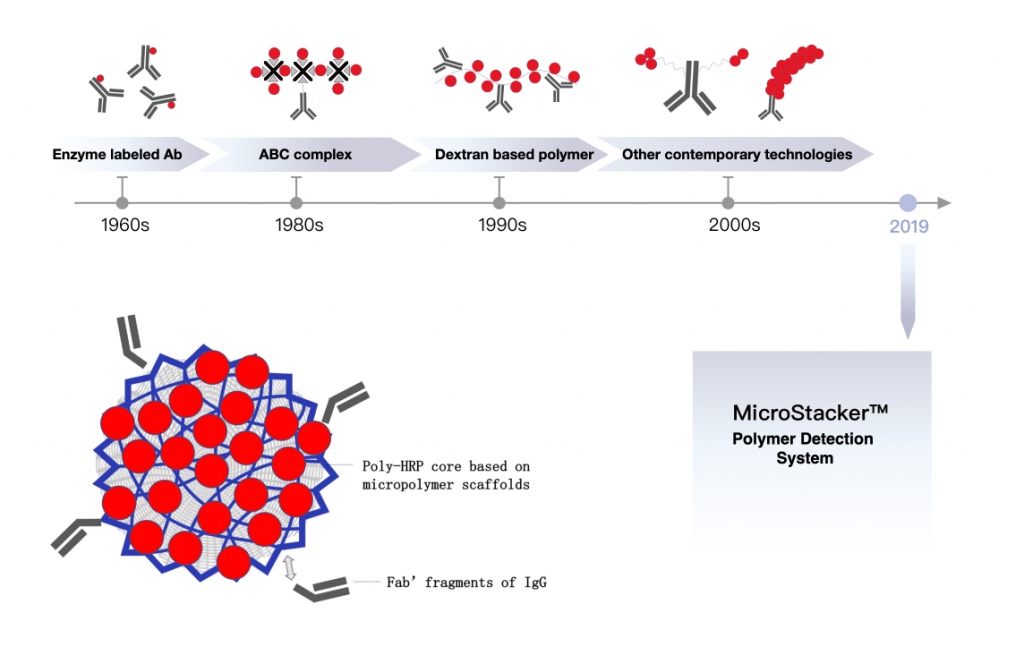
Dealing with scarce cell groups makes signal strength vital. Celnovte’s MicroStacker™ Plus Polymer Detection Kit employs a fresh micro-polymer frame.
-
Feature: This approach packs a lot of HRP (Horseradish Peroxidase) units onto a small polymer link, avoiding the crowding seen in usual dextran setups.
-
Advantage: Better pickup and signal-to-noise balance. One study comparison found MicroStacker™ gave sharper edge and core staining in p16/Ki-67 paired labels than standard ways, which matters for spotting odd cells in early neck area issues.
Clinical Scenarios: Where Theory Meets Practice
Seeing how these tools work in everyday lab tasks is key to getting the most clinical gain.
Cervical Cancer Triage (p16/Ki-67 Dual Staining)
-
The Problem: Basic LBC spots odd cells, but it can’t always tell which high-risk HPV cases will turn into serious spots.
-
The Celnovte Solution: Using the CNT 480 with our p16/Ki-67 Dual Staining Detection Kit. This setup shows cell cycle shifts (p16) and growth activity (Ki-67) in one cell at the same time.
-
Application: It helps sort ASC-US or LSIL findings. Doctors get a clear warning sign, cutting down on extra checks while catching at-risk cases soon.
Lung Cancer FNA and Subtyping
-
The Problem: Getting enough material for a complete IHC set in lung cancer proves hard. FNA yields are limited and valuable.
-
The Celnovte Solution: The strong pickup from the MicroStacker™ system lets pathologists test a full typing set (TTF-1, p40, Napsin A) on just a few cytology slides.
-
Application: It fixes the “Not Enough Material for Diagnosis” hurdle. Strong stains on thin samples skip the need for another biopsy and speed up the care start.
Conclusion
With medicine heading to tailored care, the line between tissue study and cell study fades further. Celnovte works to supply the tech link that lets labs run solid IHC on LBC samples with full trust. Pairing the automation of the CNT Series with the exact molecular side of MicroStacker™ technology, we make sure each cell shares its whole tale.
Contact Celnovte today to schedule a demo of our LBC-IHC integrated solutions and elevate your diagnostic accuracy.
FAQ
Q: Can I use standard tissue IHC reagents for LBC samples on Celnovte machines?
A: Many main antibodies match up, but we suggest Celnovte’s tuned LBC detection kits and solutions. These are made to hold cell sticking and lower extra noise associated with cytology fixers.
Q: How does the CNT 480 prevent cell loss during the heating process?
A: The CNT 480 applies a fine-tuned heat unit and special “Super-Adhesion” slides. Even in heat-based epitope retrieval, cells stay fixed to the glass.
Q: Is the MicroStacker™ system compatible with other automated platforms?
A: MicroStacker™ works best with Celnovte tools for top outcomes, but its sensitive polymer method comes in forms to fit various lab flows and needs.
Q: How long does the total LBC-IHC process take on your system?
A: Our full automated flow finishes a basic IHC set on LBC slides in about 2.5 to 4 hours, based on the exact steps, much quicker than hand-done cytology staining.
RELATED PRODUCTS
![[Yellow/Cyan] P16/Ki-67 Dual Staining Detection Kit](https://www.celnovte.com/wp-content/uploads/2025/12/Immunofluorescence.jpg "[Yellow/Cyan] P16/Ki-67 Dual Staining Detection Kit")
