


As pathology laboratories handle more biopsy specimens, oncology cases, and immunohistochemistry (IHC) testing requests, staining capacity can quickly become a bottleneck. An instrument that once supported daily operations may struggle to keep up with growing slide volumes, multiple staining protocols, and shorter turnaround time expectations.
Choosing a high-throughput IHC stainer is therefore not simply about selecting a system with a larger slide capacity. Laboratories need to consider how many slides they process each day, how efficiently the instrument handles multiple batches, and whether new slides can be loaded while existing staining runs are still in progress.
Understanding these factors helps laboratories select an automated platform that can support both current workloads and future growth. For a better understanding of automated staining workflows, explore our guide to immunohistochemistry staining technology. Laboratories planning to expand their staining capacity can also review Celnovte Biotech's IHC automation solutions or contact our team to discuss their workflow requirements.
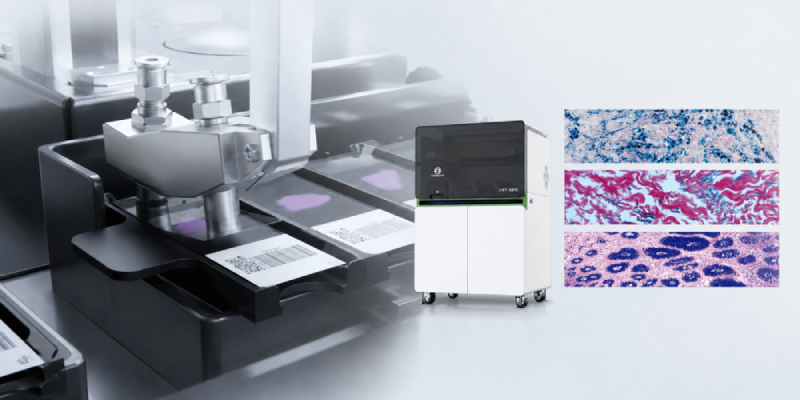
Start with Your Daily IHC Sample Volume
The first step in selecting a high-throughput IHC stainer is understanding the laboratory's actual daily workload.
Slide volume can vary considerably between pathology laboratories. A small laboratory may process a relatively stable number of IHC slides each day, while a regional diagnostic center or hospital pathology department may handle a much larger volume with significant fluctuations.
When evaluating equipment capacity, consider three workload scenarios:
Current daily volume: How many slides need to be stained during a typical working day?
Peak daily volume: How many slides must be processed during particularly busy periods?
Projected growth: Is the laboratory expecting more testing requests as its diagnostic services expand?
It is also important to distinguish between slides, tests, and patient cases. One patient case may require multiple IHC markers, meaning the number of slides can be considerably higher than the number of specimens.
For example, a laboratory processing 50 patient cases per day may need to stain substantially more than 50 slides. Equipment selection should therefore be based on actual staining demand rather than case numbers alone.
A practical approach is to select an instrument that can handle peak workloads without requiring every staining cycle to operate at maximum capacity.
Evaluate Batch Capacity Beyond the Maximum Slide Count
Slide capacity per run is one of the most visible specifications of a high-throughput IHC stainer. However, the maximum number of slides an instrument can accommodate does not always reflect how efficiently it manages daily laboratory operations.
Laboratories should examine how slides are organized into batches, whether different staining protocols can run simultaneously, and how easily additional slides can be incorporated into the workflow.
For example, a system with multiple independent slide trays allows laboratory staff to organize specimens into smaller groups while maintaining a larger overall processing capacity. This can be particularly useful when different antibodies or staining protocols require different processing conditions.
The Celnovte Biotech CNT320 Fully Automated IHC/ISH Stainer is designed for medium- to high-throughput pathology laboratories. It accommodates up to 60 slides across six independent trays, with 10 slides per tray.
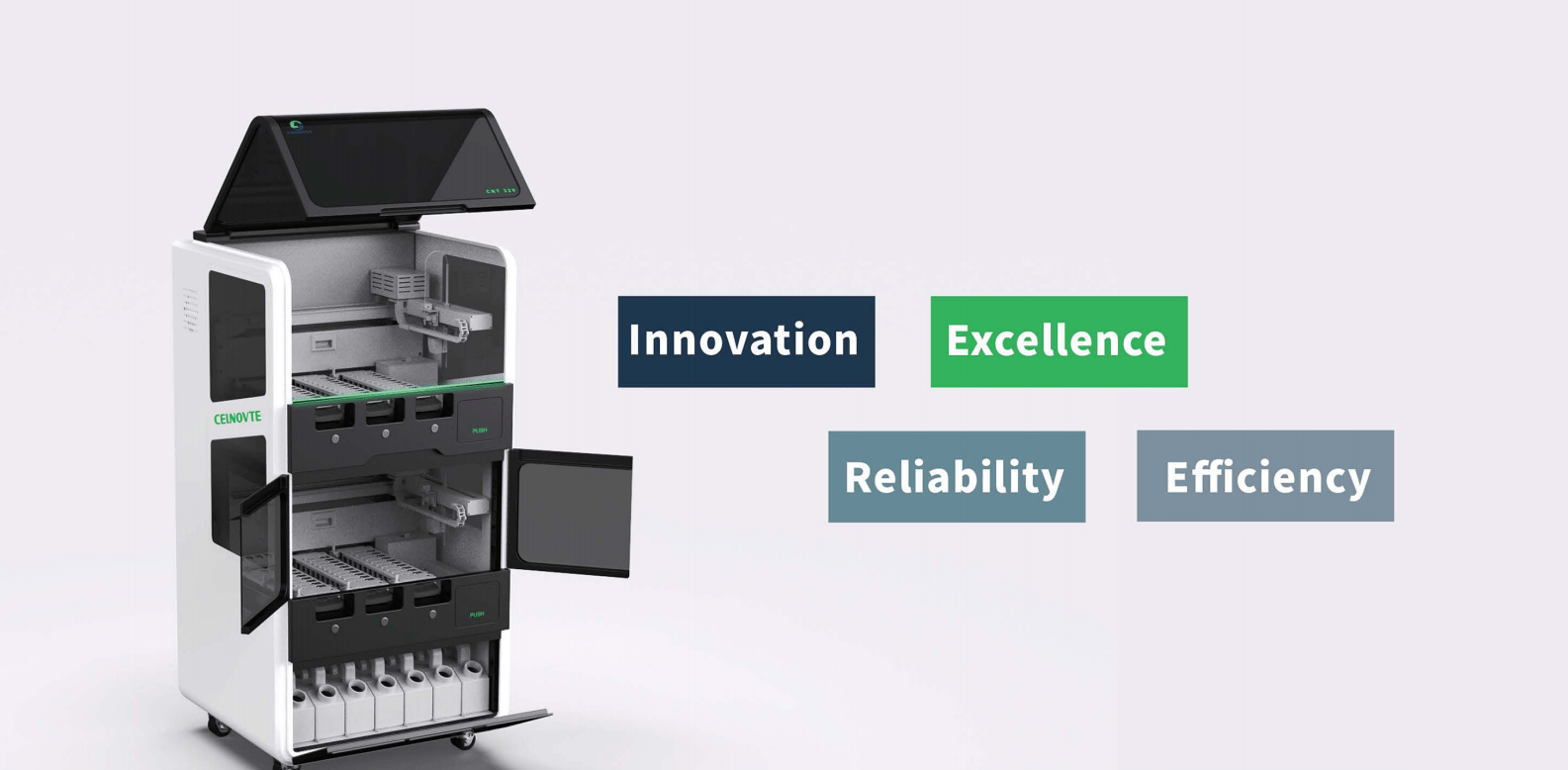
This configuration allows laboratories to organize staining workloads more flexibly rather than treating all slides as a single fixed batch. The system also supports continuous loading and unloading, customizable protocols, and LIS integration. Its stated processing capacity reaches up to 180 tests per day, making it a practical option for laboratories with growing IHC testing requirements.
For laboratories with even higher slide volumes or more demanding workflows, the CNT360 Full Automatic IHC&ISH Stainer offers two capacity configurations: M1 supports 60 slides per run, while M2 supports up to 120 slides per run.
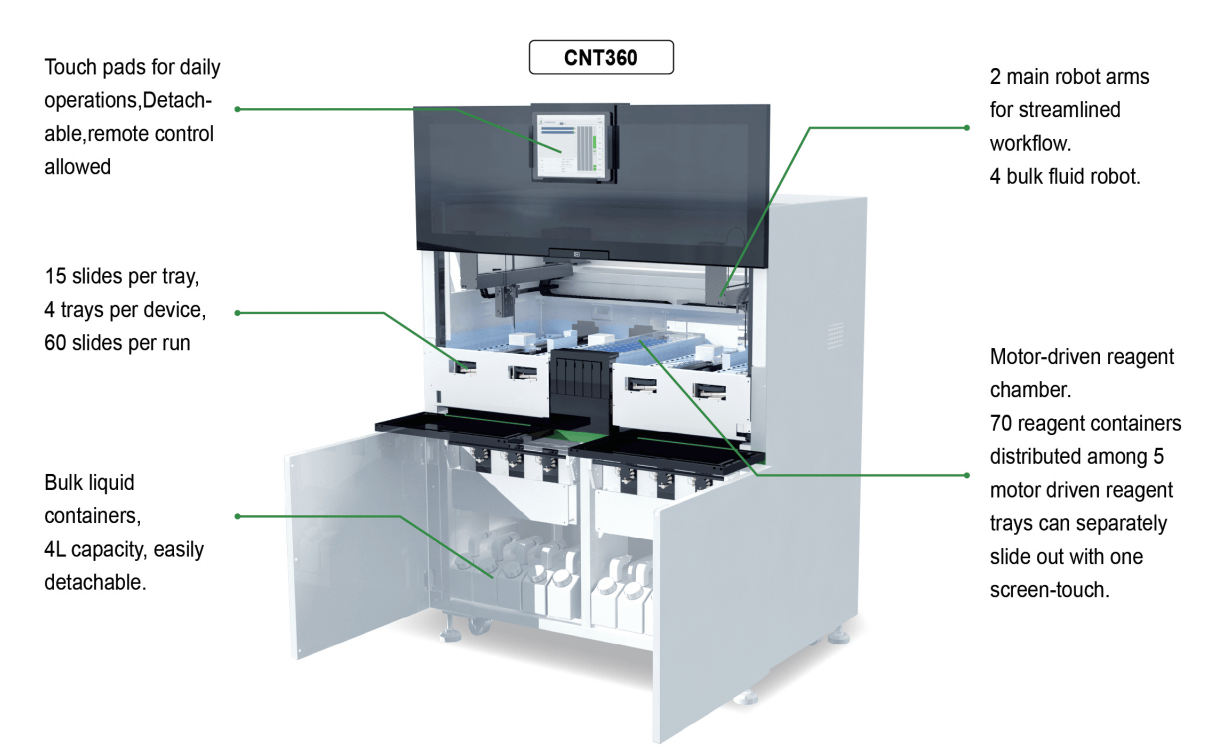
The M2 configuration also features four main robotic arms and eight bulk liquid trains, supporting more extensive processing capacity.
When comparing systems, laboratories should look beyond the headline slide count and determine whether the available batch configuration matches their daily testing patterns.
Check Whether the System Supports Continuous Operation
For laboratories with increasing workloads, continuous operation can be just as important as maximum slide capacity.
Traditional batch-based workflows may require laboratory staff to wait until an entire staining cycle finishes before preparing the next group of slides. This creates idle time between runs and can limit the number of slides processed during a working day.
A high-throughput IHC stainer with continuous loading and unloading capabilities helps reduce these interruptions.
For example, if a laboratory has several groups of specimens arriving throughout the day, staff should be able to introduce additional slides without unnecessarily stopping the current staining process.
The CNT320 supports continuous slide loading and unloading during operation. This allows laboratory personnel to manage incoming specimens more flexibly without waiting for the entire batch to finish.
The CNT360 also supports loading and unloading slides and reagents during protocol runs. In addition, it allows multiple staining protocols to run simultaneously, helping laboratories manage different testing requirements on one platform.
These capabilities are particularly valuable for laboratories that process a combination of routine IHC tests, specialized markers, and ISH applications.
When evaluating a high throughput IHC stainer system, ask whether continuous operation means genuine mid-run loading and unloading, or simply the ability to start another batch after the previous cycle is completed. The distinction can have a meaningful impact on daily workflow efficiency.
Consider Turnaround Time and Workflow Coordination
High slide capacity does not automatically translate into faster results. Turnaround time depends on the complete staining cycle, including slide preparation, antigen retrieval, incubation, detection, washing, and counterstaining.
A system that accommodates more slides but requires significantly longer processing cycles may not provide the expected improvement in daily throughput.
For this reason, laboratories should compare processing time alongside slide capacity.
The CNT320 has a stated turnaround time of no more than 3.5 hours, while the CNT360 offers a 2.5-hour turnaround time. These specifications provide useful reference points when estimating daily processing schedules.
Workflow coordination also matters. Features such as automated barcode recognition, reagent monitoring, customizable protocols, and LIS integration can help reduce manual handling and improve the organization of staining tasks.
For laboratories running multiple protocols, these functions help coordinate specimen identification, reagent management, and processing schedules more efficiently.
Match Instrument Capacity with Future Laboratory Growth
An IHC stainer should support more than today's workload. Laboratories should also consider how their testing requirements may change over the next few years.
Increasing oncology testing demand, additional diagnostic services, and expanded biomarker panels can all contribute to higher slide volumes.
If current equipment is already operating close to its maximum capacity, even a moderate increase in testing demand may create scheduling pressure.
A suitable high-throughput IHC stainer should provide enough processing capacity to accommodate anticipated growth while maintaining manageable daily workflows.
For laboratories with moderate but increasing workloads, a 60-slide platform with continuous loading may provide sufficient flexibility. Laboratories handling larger batches or multiple staining protocols may benefit from a system with a higher per-run capacity and more extensive automation.
The objective is not necessarily to purchase the instrument with the largest capacity. It is to select a system that provides the right balance between daily throughput, batch flexibility, processing time, and future demand.
Choose a High-Throughput IHC Stainer That Fits Your Workflow
Selecting the right high-throughput IHC stainer requires a clear understanding of how your laboratory operates. Daily slide volume, batch capacity, continuous loading, and staining turnaround time should all be evaluated together.
For laboratories looking to increase processing capacity, the Celnovte Biotech CNT320 and CNT360 offer different configurations to support medium- and higher-volume IHC workflows. Their automated processing capabilities, flexible slide handling, and workflow management features help laboratories manage growing staining demands.
Rather than focusing on a single capacity specification, evaluate how the instrument will perform across a full working day and whether it can accommodate future increases in testing volume.
Explore Celnovte Biotech's automated IHC stainer solutions to find a platform that matches your laboratory's processing requirements, or contact Celnovte Biotech to discuss your daily slide volume, batch capacity, and automation needs.