


An immunohistochemistry (IHC) stainer plays an important role in modern pathology laboratories, automating processes such as deparaffinization, antigen retrieval, antibody application, detection, and counterstaining. However, even a highly automated system requires regular maintenance to maintain reliable staining performance and minimize workflow interruptions.
Poor maintenance can contribute to reagent contamination, inconsistent staining, fluid delivery problems, and unexpected equipment downtime. For laboratories processing large numbers of tissue samples, these issues may affect turnaround time and daily productivity.
Understanding how to maintain an IHC stainer is therefore essential for laboratory technicians, pathology managers, and equipment operators. The following practices provide a practical framework for maintaining automated immunohistochemistry staining equipment.
Perform Daily Cleaning After Staining Runs
Daily cleaning is one of the most important aspects of IHC stainer maintenance. Residual antibodies, detection reagents, buffers, and other processing solutions may accumulate inside the instrument over time.
If these residues are not removed properly, they may contribute to contamination, blocked fluid pathways, or inconsistent reagent delivery.
Laboratory personnel should establish a routine cleaning procedure that includes:
Clean the slide processing area: Remove visible reagent residues and debris from accessible surfaces according to the manufacturer's instructions.
Inspect reagent dispensing components: Check dispensing probes and accessible fluid delivery areas for residue buildup or visible obstructions.
Check slide trays and racks: Remove remaining liquid and tissue debris to maintain a clean processing environment.
Clean external surfaces: Wipe instrument surfaces with cleaning agents approved by the manufacturer.
Inspect waste collection areas: Confirm that waste containers are properly positioned and do not contain excessive accumulated liquid.
Cleaning procedures should follow the equipment manufacturer's recommendations. Abrasive materials, incompatible solvents, or unapproved cleaning agents may damage instrument components.
Monitor Reagents and Consumables
Reagent management directly affects IHC staining quality and equipment reliability. Expired reagents, improper storage, or cross-contamination can contribute to inconsistent staining results.
Before starting a staining run, operators should verify reagent identity, expiration dates, storage conditions, and available volumes.
Several practices can help improve reagent management:
Check reagent levels before starting each batch.
Follow recommended storage temperatures and handling instructions.
Replace expired or contaminated reagents promptly.
Ensure reagent containers are correctly positioned.
Monitor bulk liquid and washing solution levels.
Maintain separate handling and disposal procedures for hazardous waste.
Automated systems with reagent monitoring and flexible dispensing settings can simplify daily management. For example, the Celnovte Biotech CNT320 Fully Automated IHC/ISH Stainer provides 72 reagent positions and supports selectable dispensing volumes of 100 μL, 120 μL, and 150 μL. Its software interface also provides visual monitoring of reagent volume and equipment status.
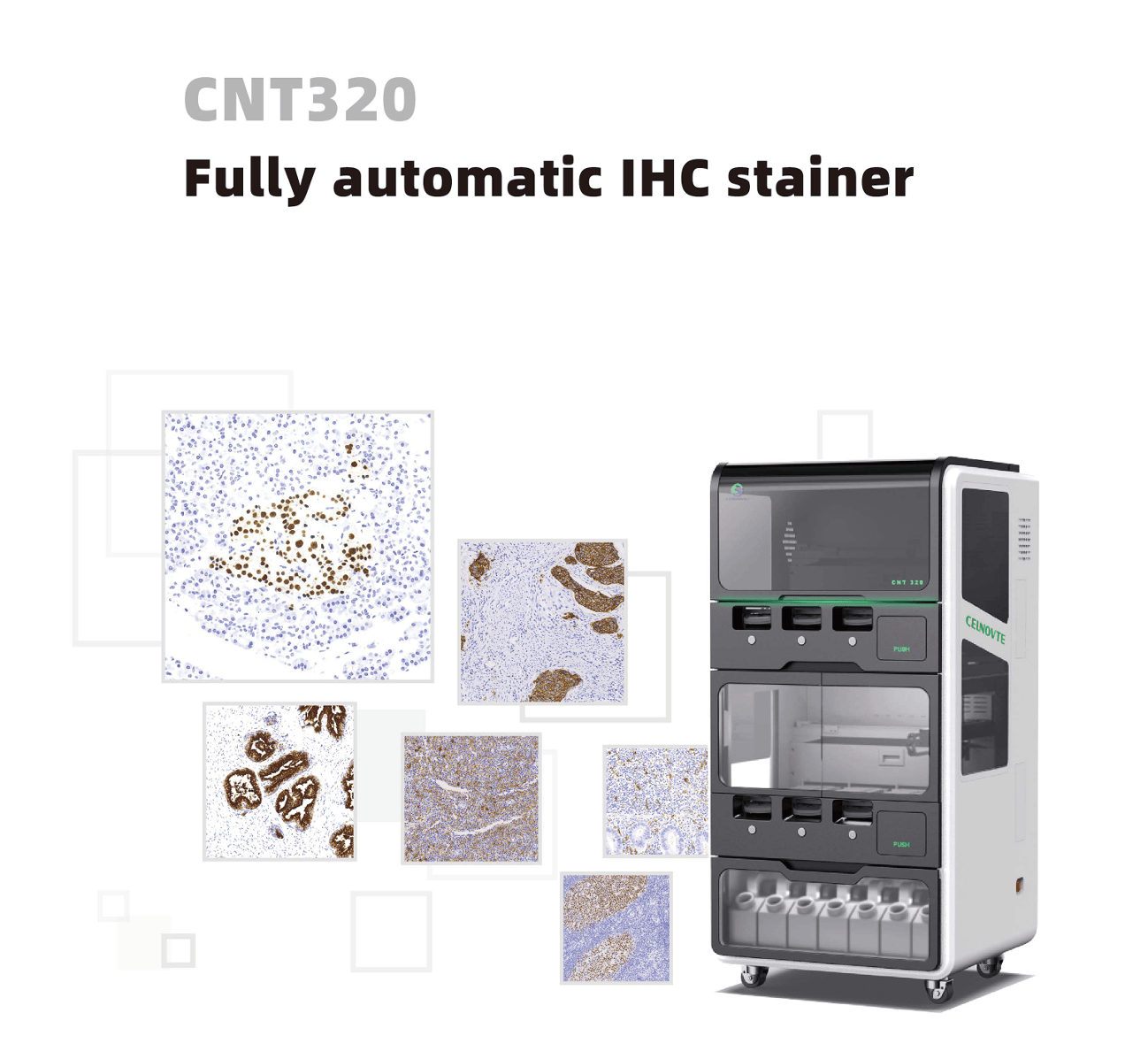
These functions help operators manage reagent consumption and identify potential workflow issues before they interrupt staining operations.
Inspect Fluid Delivery and Waste Systems
Fluid delivery is central to automated immunohistochemistry. The instrument must dispense reagents and washing solutions consistently throughout different processing stages.
Problems involving dispensing probes, tubing, liquid containers, or waste systems may affect reagent delivery and staining consistency.
During routine maintenance, laboratory personnel should:
Check dispensing probes for visible residue or damage.
Inspect accessible tubing and connections for leakage.
Confirm that reagent containers are correctly installed.
Verify that washing and bulk liquid supplies are sufficient.
Check waste containers for leaks, incorrect positioning, or excessive accumulation.
Review equipment alerts related to fluid delivery.
Waste management deserves particular attention. DAB-containing waste should be handled and disposed of according to applicable laboratory safety procedures and the manufacturer's instructions.
A well-designed automated IHC stainer may also provide separate waste collection arrangements to simplify waste management.
Check Temperature Control and Instrument Performance
Temperature control is particularly important during antigen retrieval and other temperature-sensitive staining procedures. Inconsistent heating conditions may affect staining reproducibility and make it more difficult to maintain standardized protocols.
Laboratories should regularly review temperature-related alerts and inspect the instrument for abnormal operating conditions.
Recommended checks include:
Confirm that heating components operate without unexpected errors.
Review temperature-related warnings in the instrument interface.
Check whether heating areas show signs of visible damage.
Verify temperature performance according to the manufacturer's calibration schedule.
Document unusual fluctuations and report persistent problems to qualified service personnel.
For example, the Celnovte Biotech CNT320 features 60 independent heating units, allowing individual slide temperature control during processing. This design supports controlled heating conditions for different staining requirements.
Regular performance verification remains important even when an instrument provides automated temperature management.
Establish a Preventive Maintenance Schedule
Waiting until an IHC stainer develops a serious fault can result in unnecessary downtime and additional maintenance costs. A preventive maintenance schedule helps laboratories identify potential problems before they affect routine operations.
A practical maintenance framework can include the following activities:
Daily maintenance
Clean accessible processing areas.
Check reagent and bulk liquid levels.
Inspect waste containers.
Review instrument status and error messages.
Confirm that the system is ready for the next run.
Weekly maintenance
Inspect accessible fluid delivery components.
Check reagent container positions and connections.
Review recurring operational warnings.
Clean removable components according to the manufacturer's instructions.
Periodic maintenance
Arrange professional inspection of critical components.
Verify temperature and dispensing performance.
Check mechanical and electrical systems.
Perform recommended calibration and software maintenance.
Replace worn components when required.
The exact maintenance frequency should be determined by the instrument manufacturer, laboratory workload, and operating conditions rather than applying the same schedule to every system.
Keep Maintenance Records and Address Problems Early
Maintenance records help laboratories track equipment condition, identify recurring problems, and improve operational consistency.
A maintenance log should include the date of each cleaning or inspection, the person responsible, any abnormal observations, corrective actions, and service history.
When unexpected staining results or equipment errors occur, operators should record the relevant run information and investigate potential causes systematically.
For example, inconsistent staining may involve reagent quality, protocol settings, temperature conditions, or fluid delivery. Equipment-related problems should be evaluated alongside other laboratory process variables rather than automatically attributing every staining issue to instrument failure.
Operators should avoid dismantling critical components or attempting repairs beyond their training. Persistent errors should be referred to qualified technical service personnel.
Choose an IHC Stainer That Supports Easier Maintenance
Maintenance requirements should also be considered when evaluating a new automated IHC stainer. Equipment design, monitoring functions, reagent management, and service accessibility can all influence the amount of routine work required from laboratory personnel.
Important considerations include:
Clear instrument status and error notifications.
Convenient access to routine cleaning areas.
Reliable reagent monitoring and fluid delivery.
Flexible protocols for different staining applications.
Technical support and preventive maintenance services.
Compatibility with the laboratory's existing workflow.
For laboratories evaluating equipment performance beyond routine maintenance, understanding processing speed and workflow flexibility is also important. Read our guide on When Does a Rapid IHC Stainer Make Sense? to learn how turnaround time and continuous loading influence daily laboratory operations.
For laboratories planning to expand testing capacity, our article on How to Choose a High-Throughput IHC Stainer for Growing Pathology Workloads provides further guidance on slide capacity, batch management, and continuous operation.
The Celnovte Biotech CNT320 Fully Automated IHC/ISH Stainer is designed for medium- to high-throughput pathology laboratories. It accommodates up to 60 slides across six independent trays, supports continuous loading and unloading, and integrates customizable protocols with LIS connectivity. These capabilities help laboratories organize routine staining workflows while maintaining better control over daily operations.

Conclusion
Effective IHC stainer maintenance involves more than cleaning the instrument after each run. It requires consistent reagent management, fluid system inspections, temperature monitoring, preventive maintenance, and accurate equipment records.
By establishing standardized maintenance procedures and addressing potential problems early, pathology laboratories can reduce avoidable downtime, support consistent staining workflows, and extend equipment service life.
For laboratories investing in automated immunohistochemistry, choosing a system with practical monitoring functions, flexible workflow management, and reliable technical support is equally important. A well-maintained instrument, combined with appropriate operating procedures, provides a stronger foundation for efficient and dependable pathology testing.