


Immunohistochemistry laboratories need more than automated staining equipment to maintain consistent results. As testing workloads grow and laboratories handle a wider range of antibodies and staining protocols, managing differences between procedures becomes increasingly important. Variations in incubation time, reagent application, washing conditions, and other process parameters can affect staining performance, particularly when multiple technicians perform the same work across different shifts.

A programmable IHC stainer addresses these challenges by allowing laboratories to manage staining procedures through predefined protocols rather than relying heavily on manual coordination. By combining automated process execution with flexible program management, modern IHC stainer technology helps laboratories establish more controlled workflows, improve repeatability, and reduce unnecessary variation between staining runs.
To understand how automated systems support this development, explore our guide to fully automated IHC stainer technology. For laboratories looking to improve their staining workflow, explore Celnovte Biotech's IHC automation solutions or contact our team to discuss your laboratory requirements.
Why Program Management Matters in IHC Staining
IHC staining involves multiple interconnected stages, including deparaffinization, antigen retrieval, blocking, antibody incubation, detection, and counterstaining. Each stage has specific requirements, and changes to one parameter may influence the overall staining outcome.
In laboratories using predominantly manual methods, technicians must coordinate these steps and maintain consistent timing and handling conditions. When several protocols are performed simultaneously, managing these requirements becomes more complicated. Differences in individual working habits can also introduce variation between runs.
Programmable staining systems provide a more structured approach. Instead of coordinating every stage manually, laboratories can organize staining procedures into defined programs with corresponding process parameters.
This approach makes protocol management more systematic. It also helps laboratories maintain consistent procedures when handling different antibodies, tissue types, or staining requirements.
How Programmable IHC Stainers Improve Workflow Control
The main advantage of programmable equipment is not simply that it performs staining automatically. Its value lies in providing greater control over how staining procedures are organized and executed.
Standardized protocol settings
A programmable IHC stainer allows laboratories to establish predefined staining conditions for different applications. Relevant parameters may include incubation duration, reagent application sequences, washing intervals, and temperature conditions, depending on the instrument's capabilities.
Once a protocol has been established and validated, the same program can be used for subsequent staining runs. This reduces the need for technicians to repeatedly coordinate individual process requirements and helps limit variation caused by inconsistent manual execution.
More organized protocol management
Different IHC applications may require different staining conditions. Without a structured management approach, maintaining multiple protocols can become difficult, particularly when laboratories frequently introduce new antibodies or adjust existing methods.
Programmable systems make it easier to organize and maintain distinct staining procedures. Laboratories can manage protocols according to their testing requirements rather than treating every staining run as an entirely separate manual task.
This is particularly useful for laboratories handling diverse case types or research applications where protocol flexibility is important.
Better coordination across laboratory shifts
When multiple technicians share staining responsibilities, maintaining consistent procedures can be challenging. A standardized program provides a common reference for process execution.
Instead of depending entirely on individual experience, technicians can work with established staining parameters. This makes workflow coordination easier across different working shifts and helps reduce differences in how routine staining procedures are performed.
The Connection Between Automation and Staining Repeatability
Repeatability is one of the most important reasons laboratories invest in IHC stainer automation.
In manual staining, variations may arise from differences in reagent application, incubation timing, washing, and operator handling. Even when technicians follow the same written protocol, small execution differences can accumulate throughout the staining process.
Automation helps address these challenges by allowing predefined procedures to be executed under controlled conditions.
For example, when the same validated staining program is used across multiple runs, the instrument can maintain the specified sequence and timing of programmed steps. This reduces dependence on manual timing and repeated operator intervention.
However, repeatability does not mean that every staining result will be identical under all circumstances. Tissue fixation, specimen quality, antibody characteristics, reagent conditions, and other pre-analytical factors can still influence staining performance.
Therefore, automated execution should be combined with appropriate protocol validation, reagent management, and routine quality control.
The objective is to make the staining process more consistent and manageable, providing a stronger foundation for reliable laboratory results.
How IHC Stainer Technology Supports More Flexible Workflows
As laboratory requirements evolve, staining systems must accommodate more than a fixed set of routine procedures.
Modern IHC stainer technology increasingly focuses on combining automated execution with adaptable workflow management. This allows laboratories to maintain standardized procedures while retaining the flexibility needed for different staining applications.
For example, an automatic immunohistochemistry stainer can help coordinate multiple stages of the staining process within an integrated system. Rather than managing each stage independently, laboratories can rely on automated processing to improve workflow continuity and reduce repetitive manual work.
Celnovte Biotech's CNT360 Automatic Immunohistochemistry Stainer provides an automated staining solution for laboratories seeking more standardized IHC processing. By incorporating automated staining into routine workflows, laboratories can reduce manual intervention and establish a more structured approach to staining management.
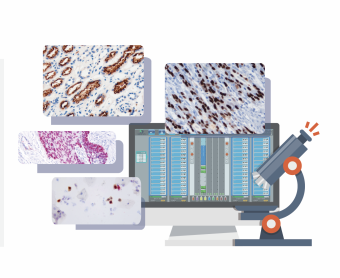
For laboratories evaluating broader automation requirements, Celnovte Biotech also offers an CNT330 IHC Automation Solution. This solution provides another option for laboratories looking to improve the organization and consistency of their immunohistochemistry workflows.
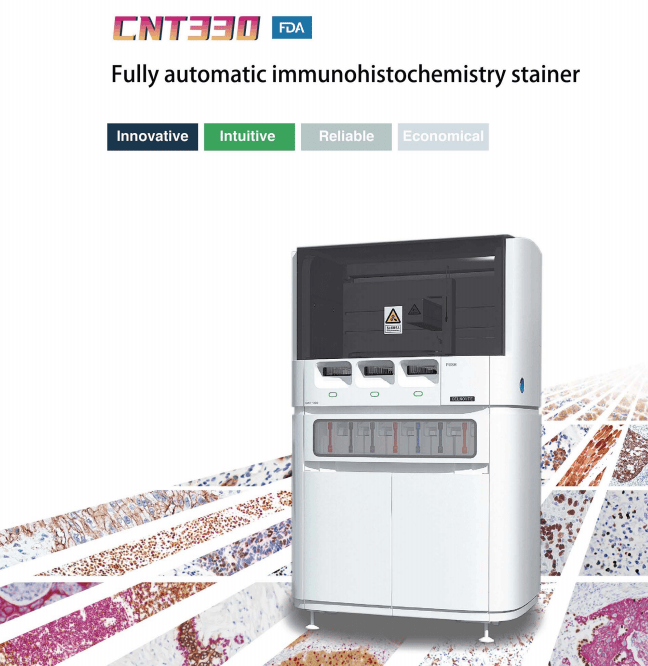
The appropriate automation approach depends on the laboratory's existing processes, staining applications, and operational requirements. Evaluating the complete workflow is therefore more useful than focusing on automation features in isolation.
What Laboratories Should Consider When Managing Programmable Staining Protocols
Although programmable systems can improve workflow control, their effectiveness depends on how laboratories manage and maintain their staining programs.
Several considerations are particularly important:
Protocol validation: Establish and validate staining conditions before introducing a program into routine laboratory use. Automated execution cannot compensate for an unsuitable staining protocol.
Parameter consistency: Maintain clearly defined process settings and avoid unnecessary changes between routine staining runs.
Reagent management: Monitor reagent quality, storage conditions, expiration dates, and compatibility with the selected staining procedures.
Performance monitoring: Review staining results regularly to identify unexpected variations and determine whether protocol adjustments are necessary.
Program documentation: Maintain clear records of validated protocols and relevant modifications to support consistent implementation across technicians and laboratory shifts.
These practices help laboratories make better use of programmable automation while maintaining appropriate control over the scientific aspects of IHC staining.
Conclusion
Programmable IHC stainers offer laboratories a more structured way to manage complex staining procedures. By organizing protocols, standardizing process parameters, and automating repetitive stages, these systems help reduce operator-dependent variation and improve workflow repeatability.
Their value extends beyond reducing manual workload. Consistent program execution makes staining procedures easier to manage, reproduce, and maintain as laboratory requirements change.
For pathology laboratories seeking better control over their immunohistochemistry workflows, investing in appropriate IHC stainer automation can be an important step toward more consistent and efficient laboratory operations.