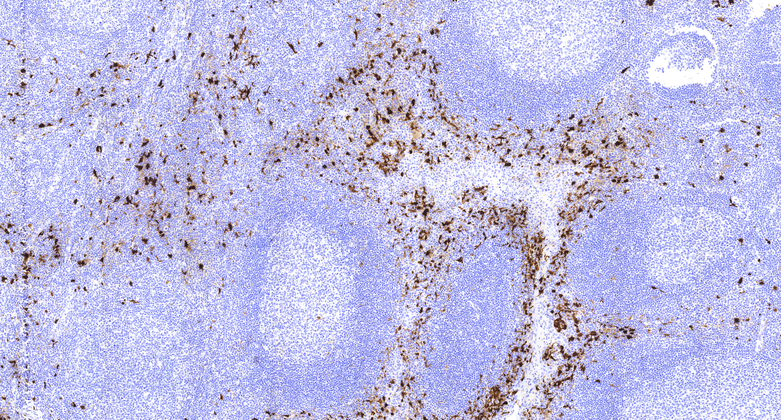


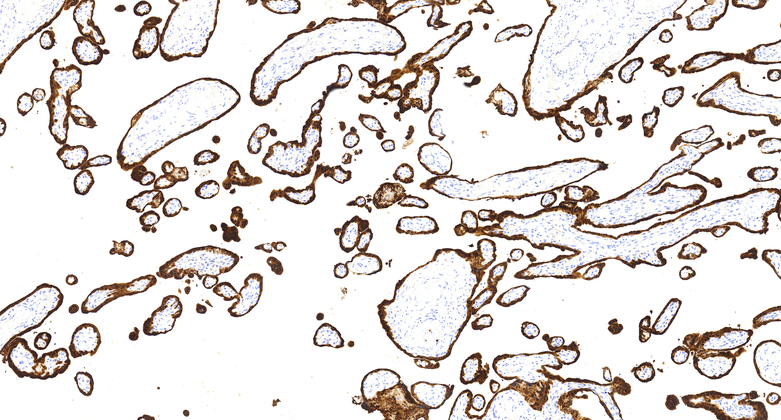
S100P(C5B10),MMab
S100P is a member of the s100 protein family and, when aberrantly expressed in tumors, plays a significant role in tumor growth, proliferation, invasion, and metastasis through various signaling pathways. It was initially found to be highly expressed in placental tissue. S100P is highly ex essed in pancreatic ductal adenocarcinoma but not in benign pancreatic ducts or acini. It has been reported that s100P is expressed in all invasive components of intraductal papillary mucinous neoplasms, including perineural, lymph node, and micro-invasion. In bile duct biopsies, 90% of primary cancers show strong s100p positivity, whereas benign biopsy tissues are negative for S100P Therefore, in bile duct biopsy specimens, s100p can help distinguish carcinoma from reactive epithelial changes. Additionally, S100P is also recognized as one of the specific markers for urothelial carcinoma.
Intended Use
S100P is a member of the s100 protein family and, when aberrantly expressed in tumors, plays a significant role in tumor growth, proliferation, invasion, and metastasis through various signaling pathways. It was initially found to be highly expressed in placental tissue. S100P is highly ex essed in pancreatic ductal adenocarcinoma but not in benign pancreatic ducts or acini. It has been reported that s100P is expressed in all invasive components of intraductal papillary mucinous neoplasms, including perineural, lymph node, and micro-invasion. In bile duct biopsies, 90% of primary cancers show strong s100p positivity, whereas benign biopsy tissues are negative for S100P Therefore, in bile duct biopsy specimens, s100p can help distinguish carcinoma from reactive epithelial changes. Additionally, S100P is also recognized as one of the specific markers for urothelial carcinoma.
[Storage and Validity]
Store at 2~8°C. Avoid freezing.
Maintain temperature below room temperature during transport, ensuring it does not exceed one week.
Specification
Download


-
Intended Use
-
Specification
Related Products