


Immunohistochemistry (IHC) is an essential technique in modern pathology, supporting tumor classification, biomarker evaluation, and treatment-related research. As testing volumes increase and diagnostic workflows become more complex, laboratories need more than a machine that automates staining. They need an instrument that can execute configurable staining protocols, maintain consistent processing conditions, and adapt to different experimental requirements.
A programmable IHC stainer addresses these needs by allowing laboratory personnel to configure, manage, and reproduce staining procedures through software-controlled workflows. For pathology laboratories, research institutions, and diagnostic service providers, this flexibility can make a meaningful difference in daily operations.
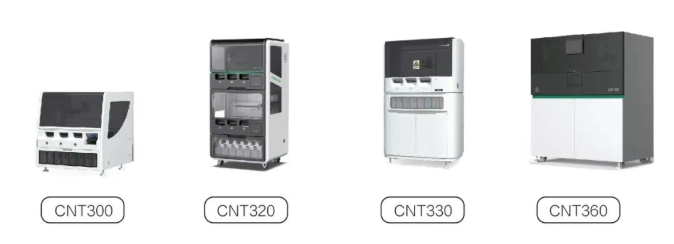
Looking for an automated IHC staining solution for your laboratory or distribution portfolio? Celnovte Biotech offers a range of fully automated IHC stainers, including the CNT300, CNT320, CNT330, and CNT360, designed for different laboratory throughput and workflow requirements. Explore our automated IHC stainer portfolio or contact Celnovte Biotech to discuss equipment specifications, reagent compatibility, and business cooperation opportunities.
What Is a Programmable IHC Stainer?
A programmable IHC stainer is an automated immunohistochemistry instrument that allows users to configure and execute staining procedures according to defined protocols.
Traditional manual IHC staining requires technicians to perform multiple steps, including deparaffinization, antigen retrieval, blocking, antibody incubation, detection, and counterstaining. Each stage involves specific timing, temperature, and reagent-handling requirements. Variations in manual operation can introduce inconsistencies between slides and batches.
A programmable system transfers these repetitive operations into software-managed procedures. Depending on the instrument, users can configure parameters such as incubation time, processing temperature, reagent dispensing volume, and individual staining steps.
The objective is not simply to reduce manual work. It is to establish a more controlled and reproducible staining workflow that laboratories can manage and refine as their testing requirements evolve.
Why Protocol Programmability Matters in IHC Workflows
Consistent Staining Across Different Batches
Reproducibility is one of the most important considerations in immunohistochemistry. Variations in incubation conditions, reagent application, or temperature can influence staining intensity, background signals, and overall slide quality.
Programmable IHC stainers help address these challenges by applying predefined processing conditions across multiple staining runs. Once a protocol has been validated for a particular application, laboratories can reuse the established settings rather than repeatedly relying on manual adjustments.
This is particularly relevant for clinical pathology laboratories processing large numbers of tissue specimens, as well as third-party testing facilities that need to maintain consistent operational standards.
Flexible Protocol Configuration
Not every IHC application follows exactly the same staining procedure. Different antibodies, tissue types, and detection systems may require adjustments to incubation conditions and other processing parameters.
A programmable IHC stainer provides greater flexibility in managing these differences. Depending on the system's software capabilities, users can select or customize protocols to accommodate routine IHC, multiplex staining, immunocytochemistry, and other supported applications.
For university pathology laboratories and pharmaceutical research departments, this flexibility is valuable when working with different biomarkers or developing experimental staining procedures.
However, programmable operation does not automatically guarantee compatibility with every antibody or reagent. Protocol settings should always be validated for the intended application.
Better Management of Laboratory Throughput
Laboratory productivity depends on more than the number of slides an instrument can process. Batch scheduling, reagent preparation, technician workload, and turnaround time all influence daily capacity.
Automated systems with configurable workflows can simplify routine processing and reduce the need for technicians to supervise every individual staining step.
Some instruments also support continuous slide loading, allowing laboratories to introduce additional slides without waiting for an entire batch to finish. This can be particularly useful for diagnostic centers and commercial laboratories managing variable sample volumes.
Improved Workflow Traceability
For laboratories operating under standardized quality management procedures, knowing how a slide was processed is important.
Programmable systems with process-monitoring capabilities can provide information about reagent dispensing, processing time, and abnormal operating conditions. These records can help technicians identify workflow deviations and investigate potential causes of inconsistent staining.
The availability of detailed monitoring and data records varies by instrument, so laboratories should evaluate these functions when comparing equipment.
Key Features to Evaluate When Selecting a Programmable IHC Stainer
For laboratory managers, distributors, and equipment procurement teams, several technical considerations deserve attention.
Protocol management: Check whether the instrument allows users to create, modify, save, and reuse staining protocols. The ability to manage different protocols is particularly important when supporting multiple antibody panels and research applications.
Temperature control: Antigen retrieval and incubation conditions can influence staining performance. Individual slide temperature control, where available, offers greater flexibility in managing thermal conditions.
Reagent dispensing accuracy: Consistent reagent application helps maintain appropriate tissue coverage and reduce unnecessary reagent consumption. Evaluate dispensing precision, selectable volumes, and reagent container design.
Slide capacity and continuous loading: Consider the number of slides processed per run, the number of independent racks, and whether the instrument supports continuous loading. These factors should match the laboratory's actual testing volume.
Software monitoring and connectivity: An intuitive interface, real-time process monitoring, error notifications, and laboratory information system (LIS) integration can improve workflow management.
How Celnovte Biotech Supports Automated and Programmable IHC Workflows
Celnovte Biotech develops integrated pathology diagnostic solutions combining automated instruments and immunohistochemistry reagents. Its IHC stainer portfolio addresses different laboratory capacities and application requirements.

For example, the CNT300Plus is a benchtop fully automated IHC stainer that accommodates up to 30 slides across three independent slide racks and supports continuous operation.
For medium- to high-throughput laboratories, the CNT320 supports up to 60 slides across six trays, continuous loading, customizable protocols, and LIS integration. Its automated workflow covers slide baking, deparaffinization, antigen retrieval, blocking, detection, and counterstaining.
The CNT360 extends the platform's application range by supporting multiple immunostaining workflows, including IHC and ISH.
Beyond instrumentation, Celnovte Biotech provides primary antibodies and proprietary MicroStacker™ detection systems, helping laboratories access an integrated reagent-and-instrument solution.
Who Can Benefit from Programmable IHC Stainers?
Programmable IHC stainers serve a range of professional users across the pathology and life sciences industries.
Clinical pathology laboratories: Support standardized routine IHC workflows and manage increasing specimen volumes.
Third-party diagnostic laboratories: Improve operational consistency across recurring testing batches.
University and research laboratories: Accommodate different experimental protocols and biomarker research requirements.
Pharmaceutical and oncology research departments: Support tissue-based biomarker evaluation and translational research.
Medical equipment distributors and pathology product resellers: Expand their product portfolios with automated staining platforms and complementary reagents.
Digital pathology and histology solution providers: Complement existing tissue-processing and slide-scanning workflows with automated IHC capabilities.
For distributors and equipment partners, the combination of instruments, antibodies, and detection reagents also creates opportunities to provide more comprehensive pathology solutions rather than selling individual equipment units.
Conclusion
A programmable IHC stainer is an important part of the transition toward more standardized and efficient pathology workflows. By combining configurable protocols, automated reagent handling, controlled processing conditions, and workflow monitoring, these systems help laboratories manage the growing complexity of immunohistochemical testing.
When selecting an instrument, laboratories should look beyond basic automation and evaluate protocol flexibility, slide capacity, temperature control, reagent management, and compatibility with their intended applications.
With its integrated portfolio of automated IHC instruments and diagnostic reagents, Celnovte Biotech supports pathology laboratories and industry partners seeking practical, scalable solutions for modern immunohistochemistry.
Interested in becoming a Celnovte Biotech distributor or exploring automated IHC equipment for your laboratory? Contact our team to discuss product specifications, technical support, and partnership opportunities.